Hunting the northern lights in Iceland: when, where and how to see them
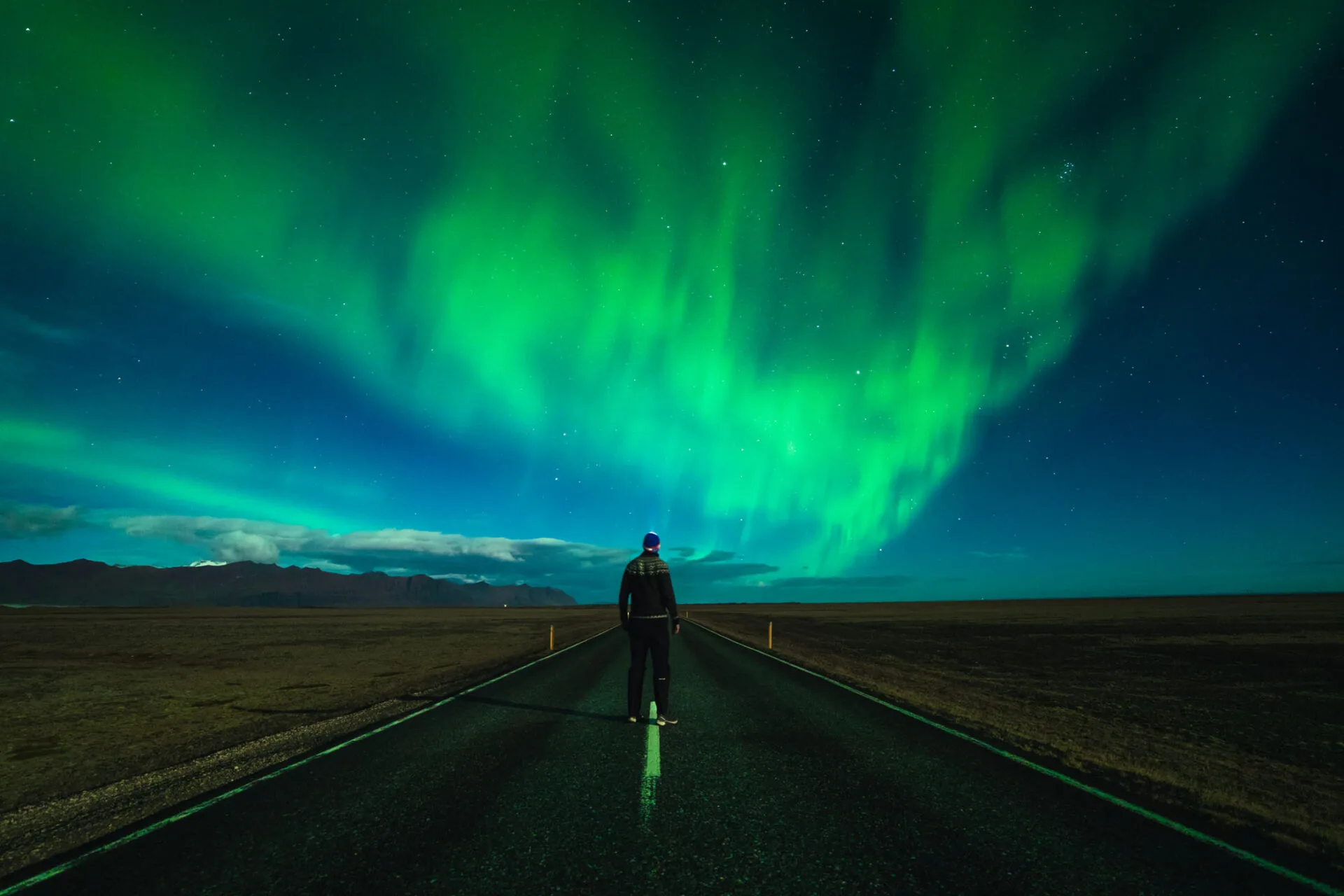
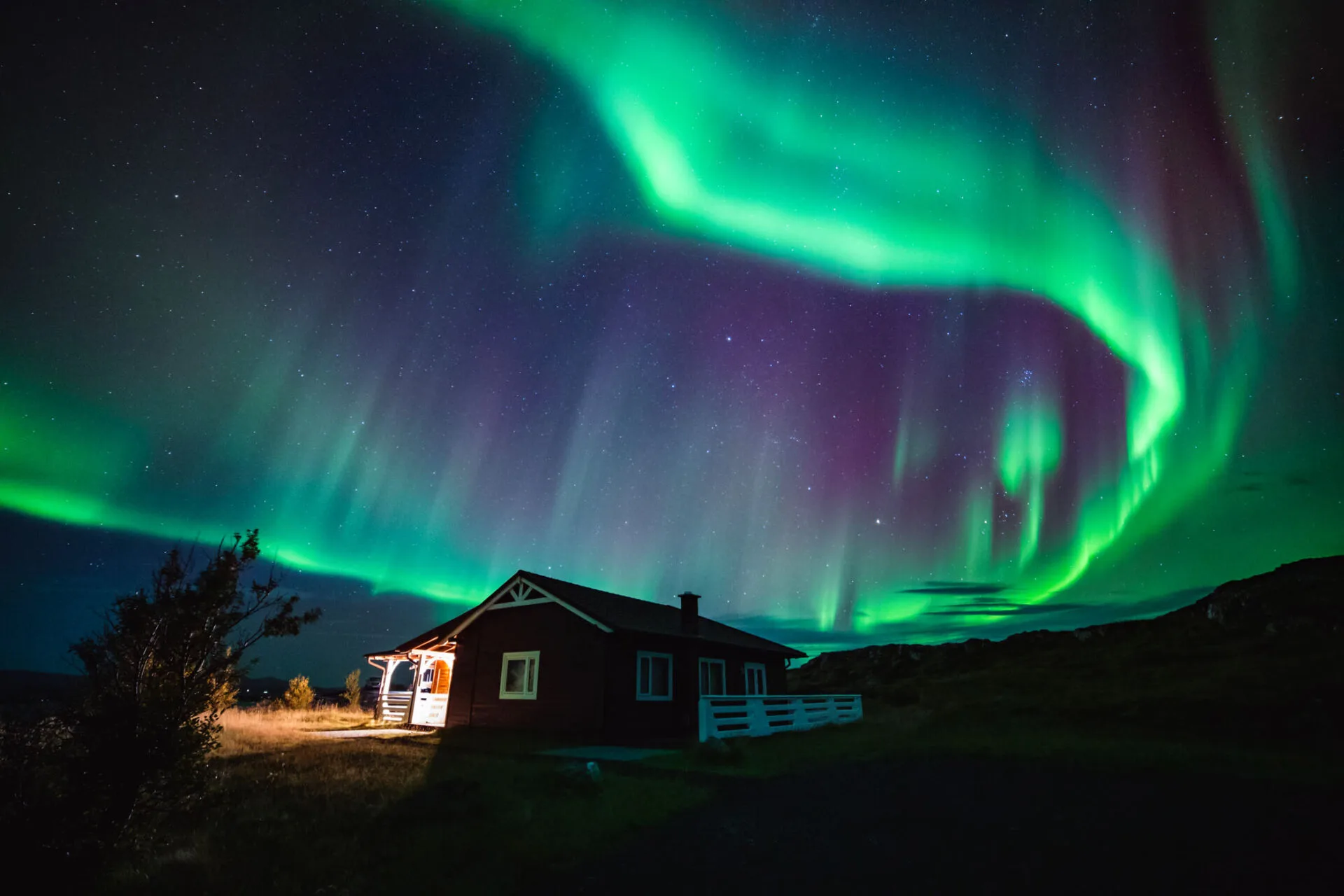
Iceland is one of the best places in the world to see the northern lights. It lies right under the auroral oval, has very little light pollution, and a landscape that turns every photo into a postcard: glaciers, black beaches, waterfalls and volcanoes. On my trips around Iceland I've spent dozens of nights outside, and in this article I share where and when to look for the northern lights in Iceland and how to photograph them.
When you can see the aurora in Iceland
The northern lights season in Iceland runs from late August to mid-April, when the nights are dark enough. The best months, to my mind, are:
- September and October: no snow yet, the roads are passable, the nights already long, and geomagnetic activity is often higher around the equinox.
- February and March: a snowy landscape, longer days for travelling and more stable weather.
- December and January have the longest nights, but also the most storms and the shortest days for getting around.
A clear sky matters most. The Icelandic Met Office, vedur.is, has an excellent cloud forecast and aurora forecast. I check it every afternoon and plan where to drive in the evening by it.
- Hvítserkur – a rock troll in the sea in the northwest 65.606° N, 20.636° W
- Kirkjufell – Iceland's most famous mountain 64.942° N, 23.307° W
- Þingvellir – national park an hour from Reykjavík 64.256° N, 21.130° W
- Vík – black beaches of the south coast 63.419° N, 19.006° W
- Jökulsárlón – glacier lagoon and Diamond Beach 64.078° N, 16.231° W
The best places to photograph the aurora
Hvítserkur
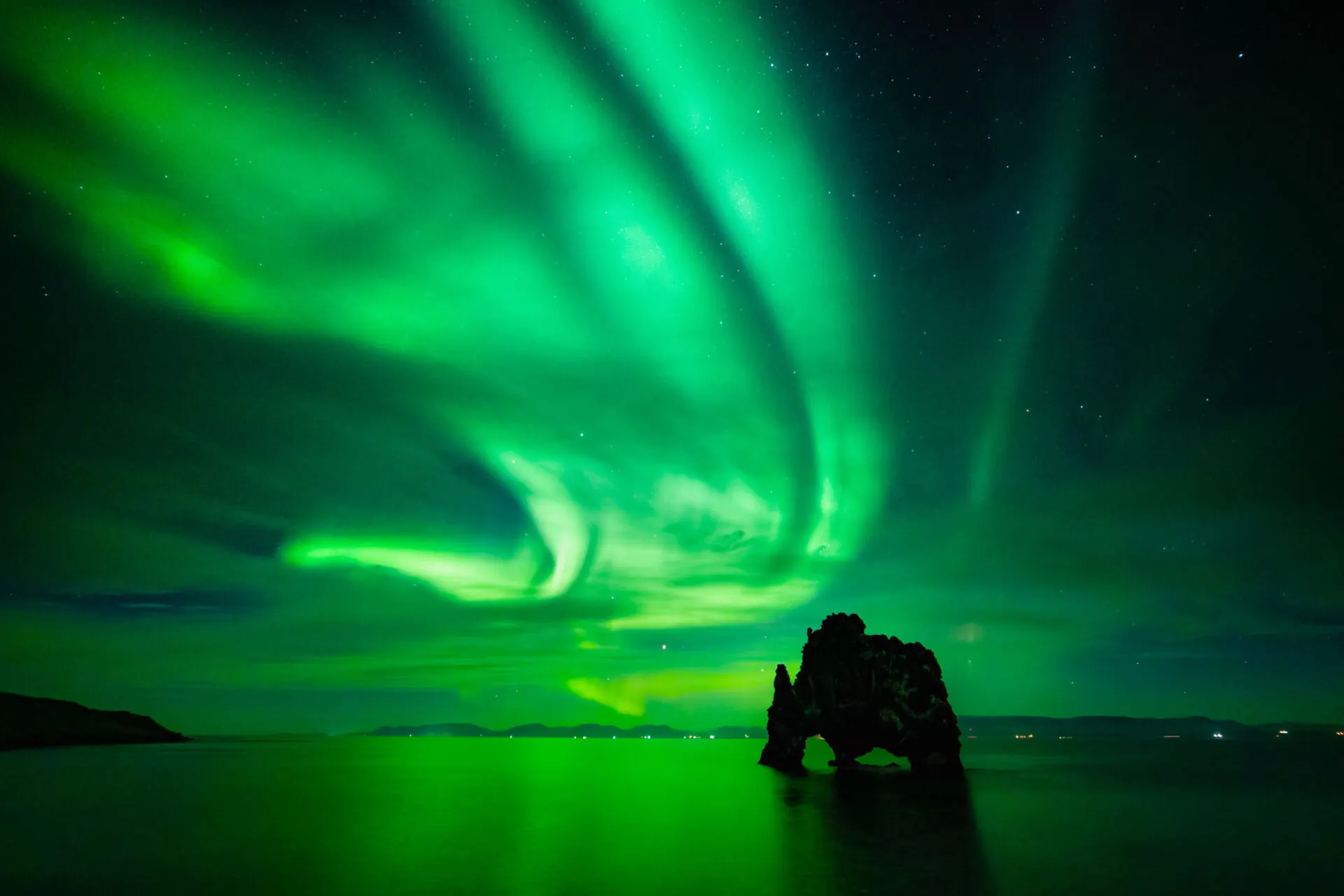
This fifteen-metre rock in northwest Iceland looks like a drinking dinosaur or a petrified troll. On a calm night the aurora reflects in the sea and you get a perfectly symmetrical image, just like the cover photo. Far from any town, it's pitch dark here.
Jökulsárlón and Diamond Beach
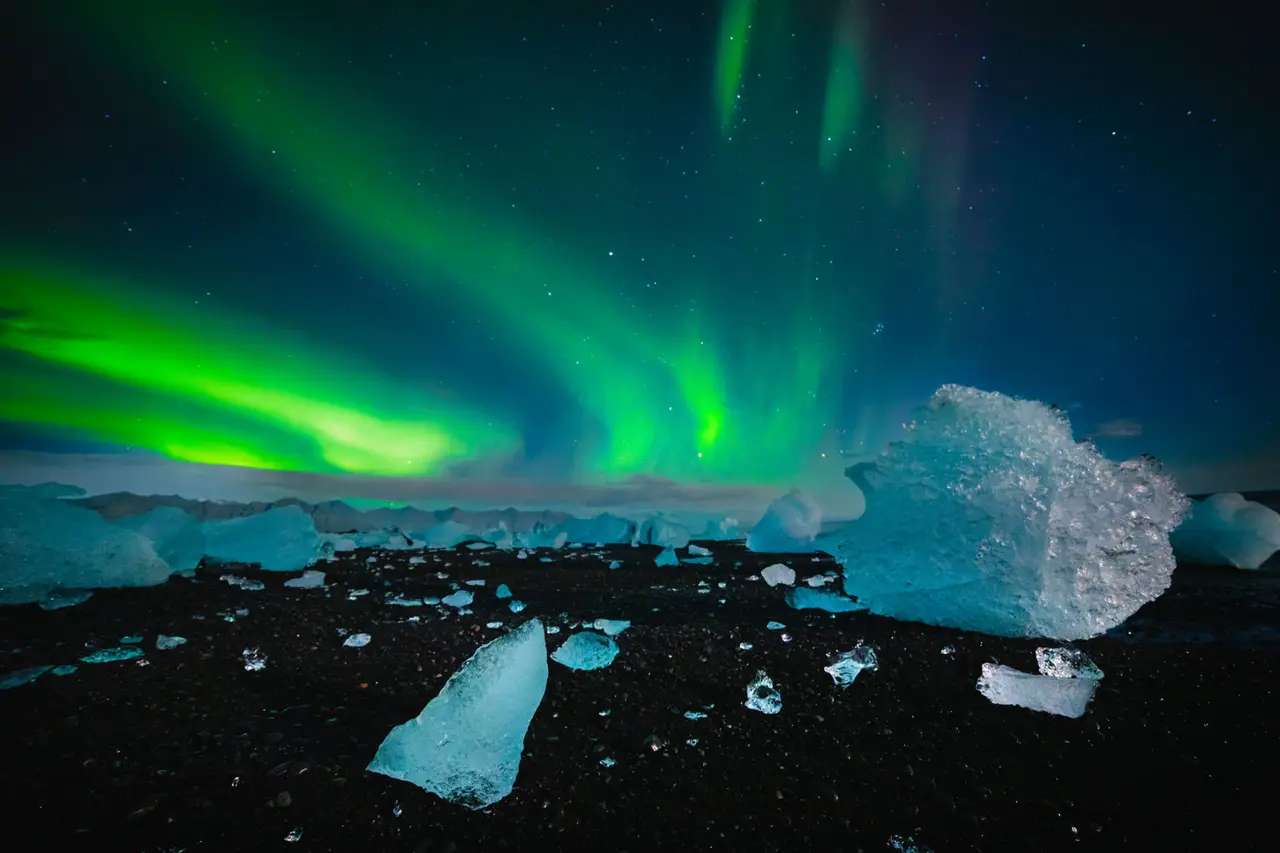
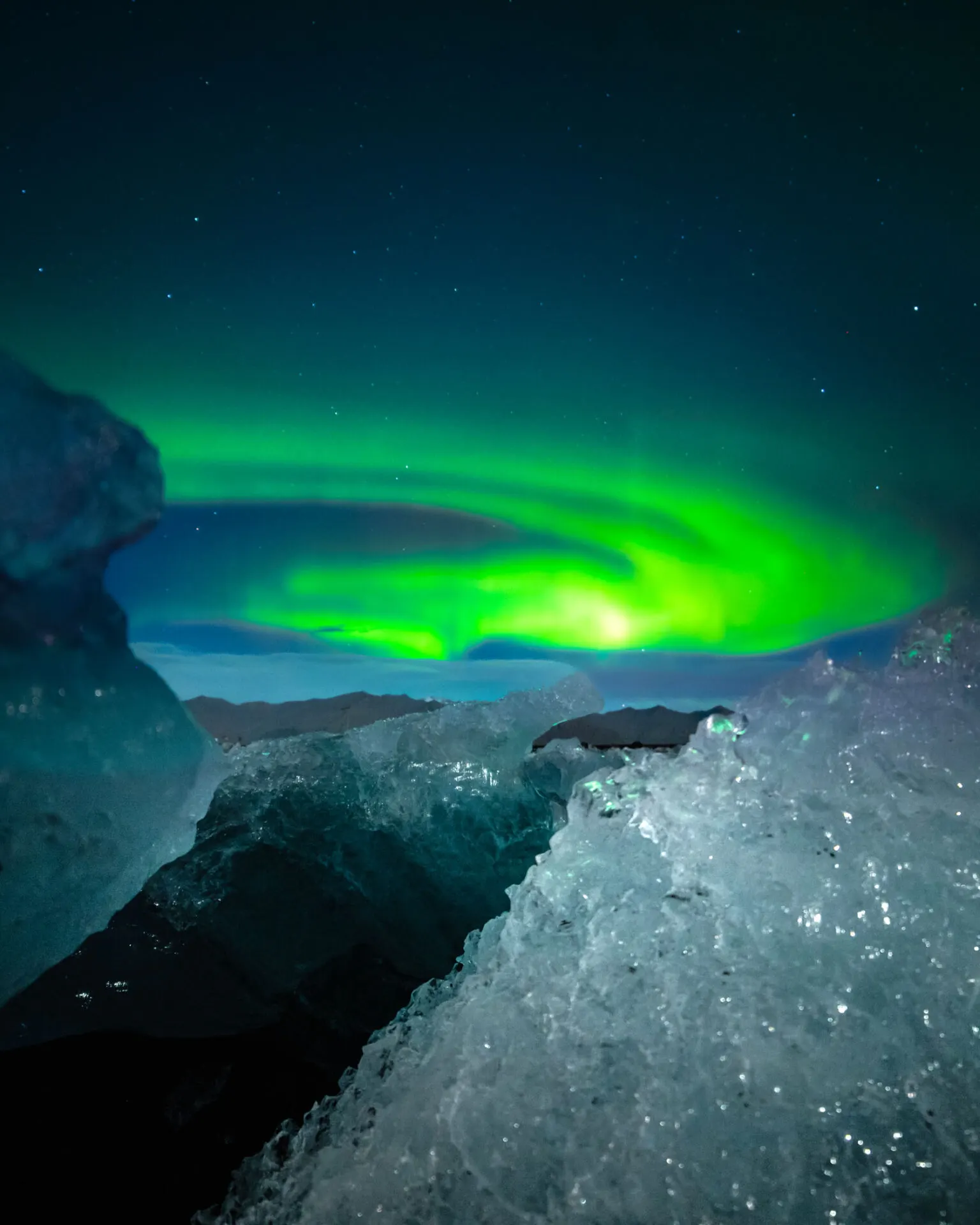
Icebergs floating in the lagoon and chunks of ice on a black beach under a green sky: for many photographers the most beautiful place in Iceland. More in a separate article on Diamond Beach.
The south coast
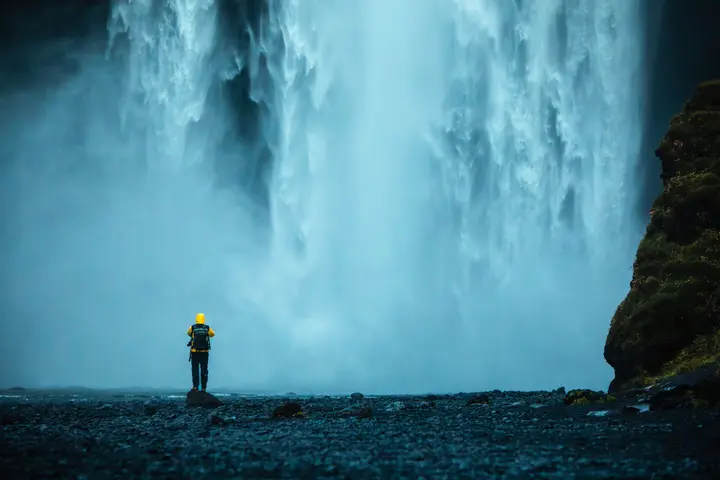
Skógafoss, Seljalandsfoss or Vík with the black beach of Reynisfjara. Waterfalls lit by the aurora are incredible; just expect spray and a wet lens. I describe the whole route in waterfalls and black beaches of the south coast.
Snæfellsnes and Kirkjufell
Kirkjufell mountain with the Kirkjufellsfoss waterfall is probably the most photographed place in Iceland. When the aurora is out there's a row of tripods, but the view is worth it. On the Snæfellsnes peninsula it's also worth stopping at Ytri Tunga beach with its seals.
Where to stay when you're hunting the aurora
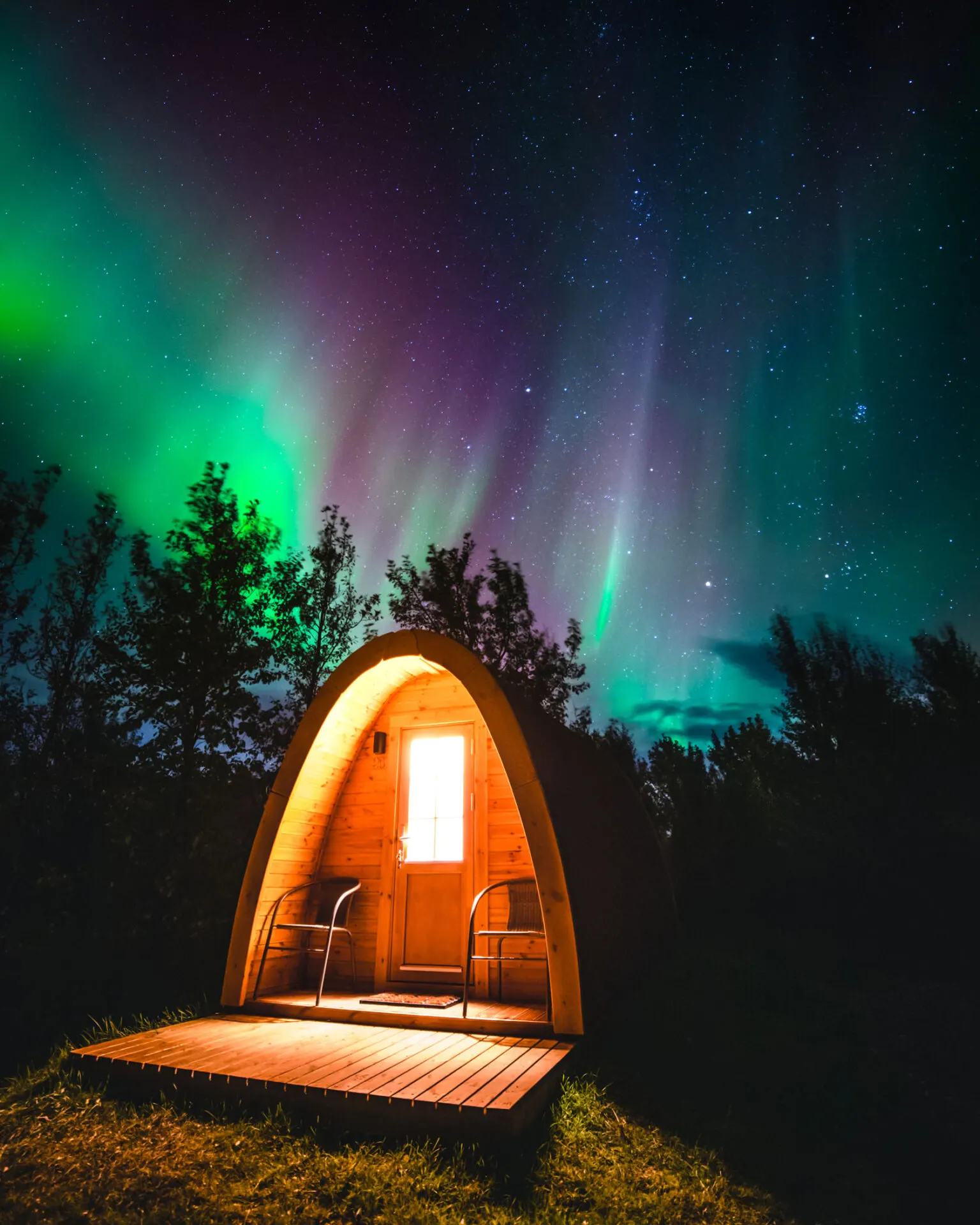
Outside Reykjavík it's dark almost everywhere. It's best to stay in the countryside: a guesthouse, a cabin or glamping. On one trip I slept in a small wooden "pod" in the woods, which I could run out of in my sleeping bag when the sky lit up.
How to photograph the aurora
A tripod, a wide-angle lens, f/2.8, ISO 1600–3200 and 2–10 seconds. Focus manually on a star. You'll find a detailed guide with settings, gear and the most common mistakes in how to photograph the northern lights.
Iceland or Norway?
In Iceland the landscape is incredibly varied, and you can cover more places in a day. Norway around Tromsø lies further north, right under the oval, and thanks to the dry interior there are more options to find clear skies in bad weather. I love both. If you're heading to Norway, see my northern lights hunting in Tromsø.
Faq
When is the best time for the northern lights in Iceland?
From September to March. September and October offer snow-free roads, February and March a snowy landscape and longer days.
Can you see the northern lights from Reykjavík?
In strong activity yes, but the city lights dim them. A 20–30 minute drive out of town is enough, for example to Þingvellir or the Reykjanes peninsula.
Do I need an organised tour to see the aurora in Iceland?
Not if you have a car and can drive in winter conditions. An organised tour does save you driving on icy roads at night, though.