New Zealand's night sky: the Milky Way and the southern lights
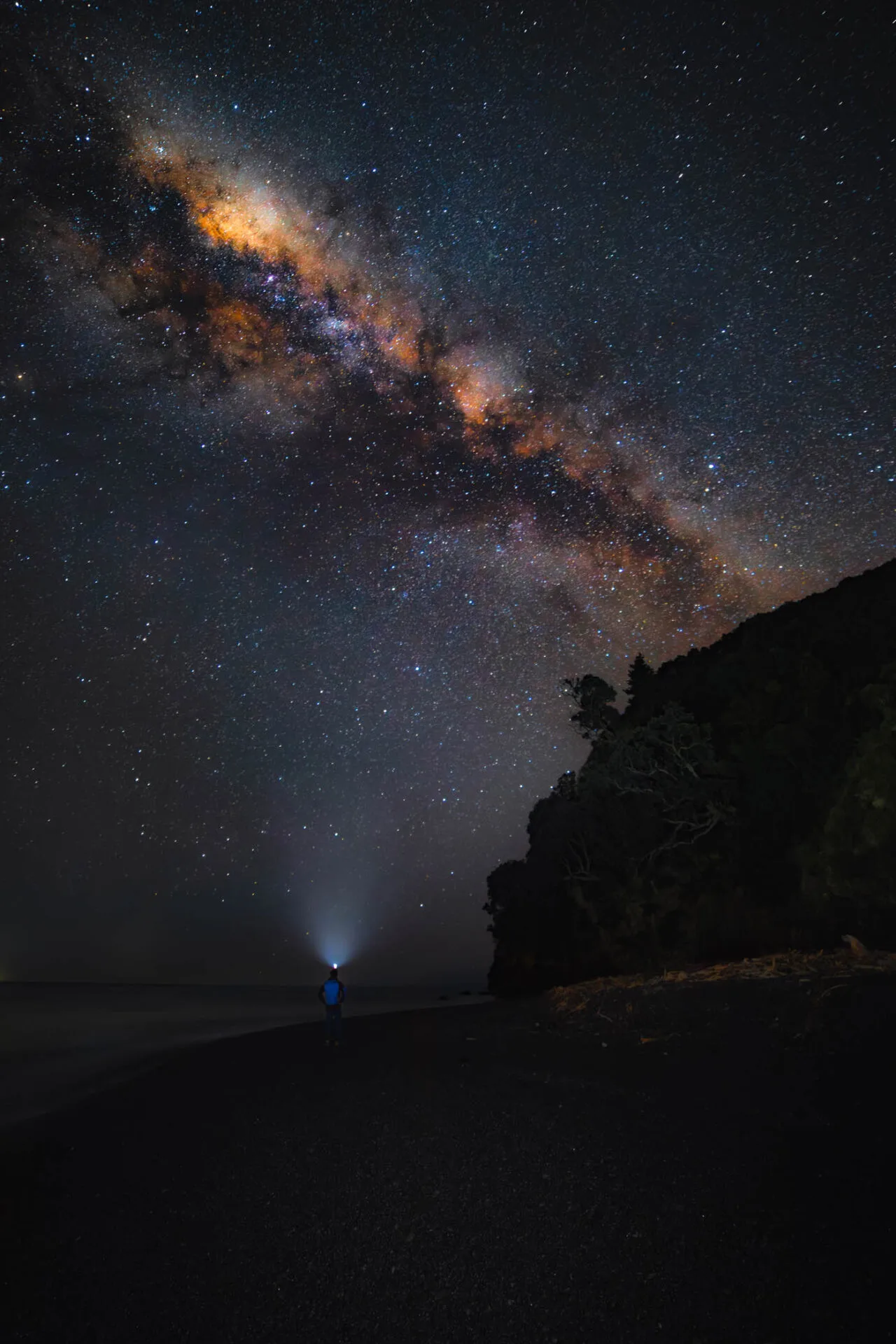
I lay on the bonnet of the car by a lake and looked up. The Milky Way stretched across the whole sky so brightly it cast a shadow. Beside it, two misty patches: the Magellanic Clouds, neighbouring galaxies you'll never see from Europe. And then a red light began to rise above the southern horizon. New Zealand's night sky is the most beautiful thing I have ever seen.
Why the sky in New Zealand is so dark
New Zealand has few people, large areas without lights and clean air. Several places hold the status of an international dark sky reserve or sanctuary. The largest is the Aoraki Mackenzie International Dark Sky Reserve around Lake Tekapo and Aoraki/Mount Cook, one of the largest dark sky reserves in the world.
- Great Barrier Island – dark sky sanctuary 36.200° S, 175.400° E
- Wairarapa – dark sky reserve 41.217° S, 175.450° E
- Lake Tekapo – Aoraki Mackenzie Dark Sky Reserve with Mount Cook 44.005° S, 170.478° E
- Stewart Island – Rakiura, the southernmost sky 46.900° S, 168.100° E
What you'll see in the southern sky
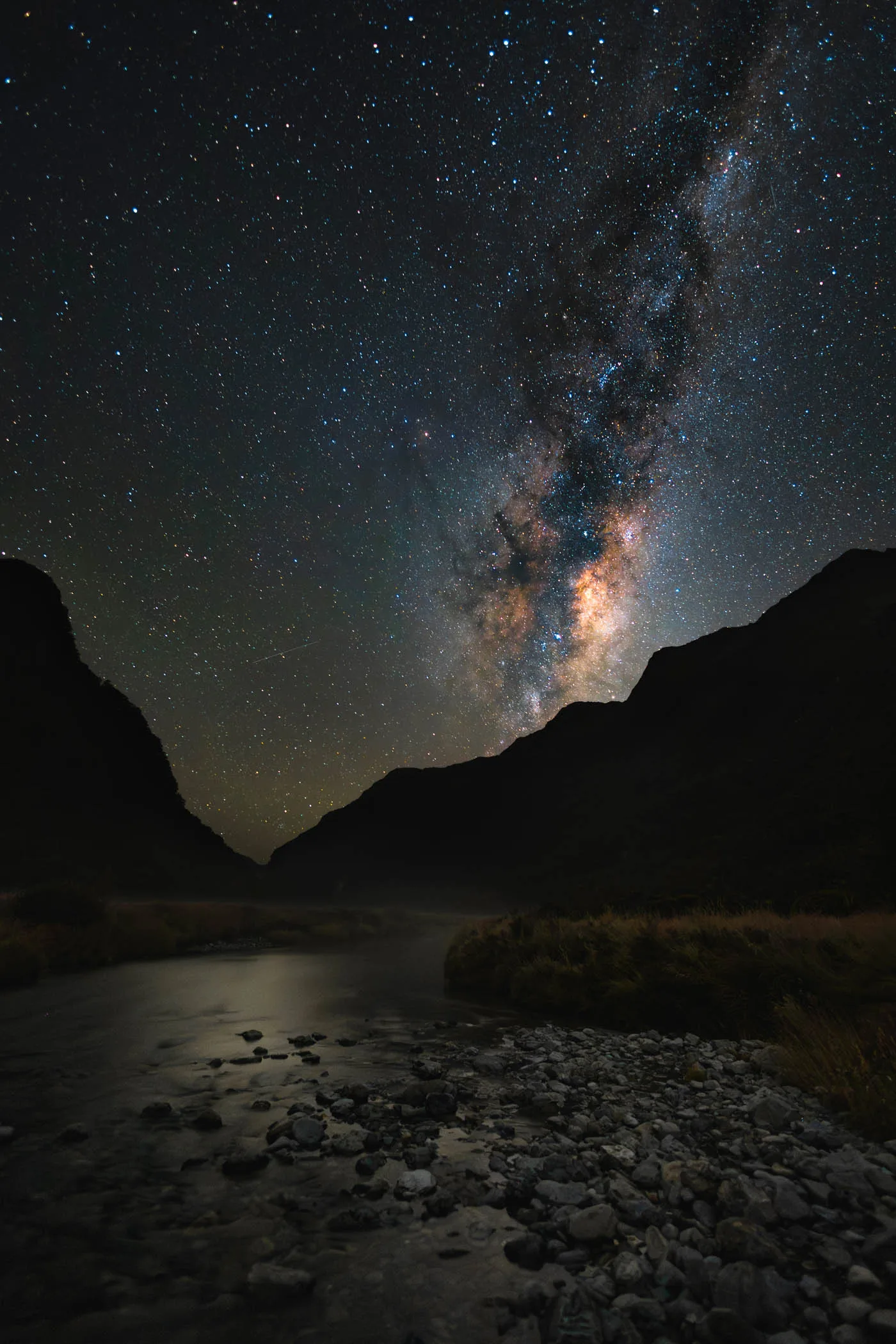
- The core of the Milky Way: in the southern hemisphere it passes right overhead. It's best seen roughly from February to October, and strongest in the winter months.
- The Southern Cross: the constellation on New Zealand's flag.
- The Magellanic Clouds: two neighbouring galaxies, visible to the naked eye.
- Matariki: the Pleiades, whose rising in June or July marks the Māori New Year. Since 2022 Matariki has been a public holiday.
Aurora australis: the southern lights
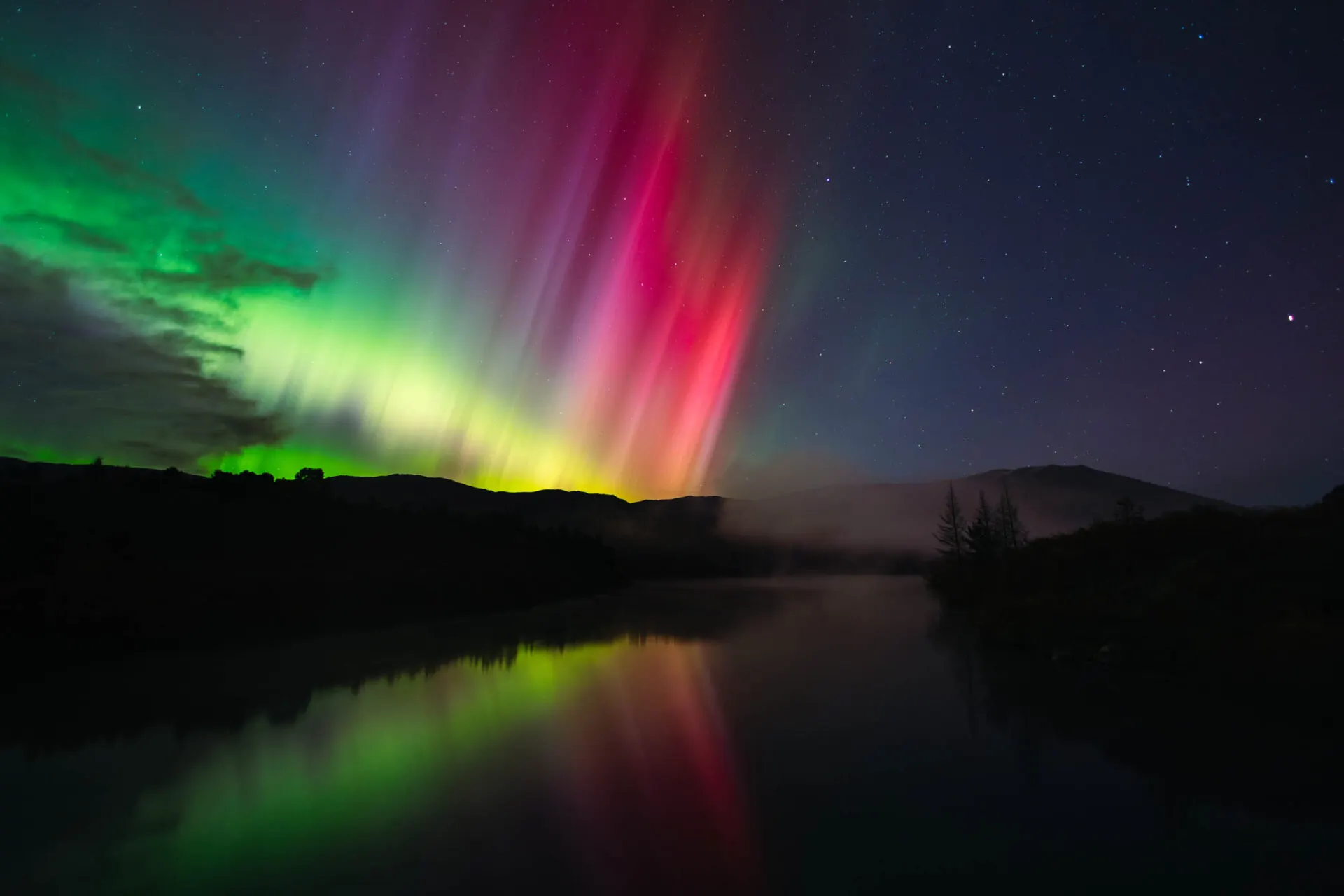
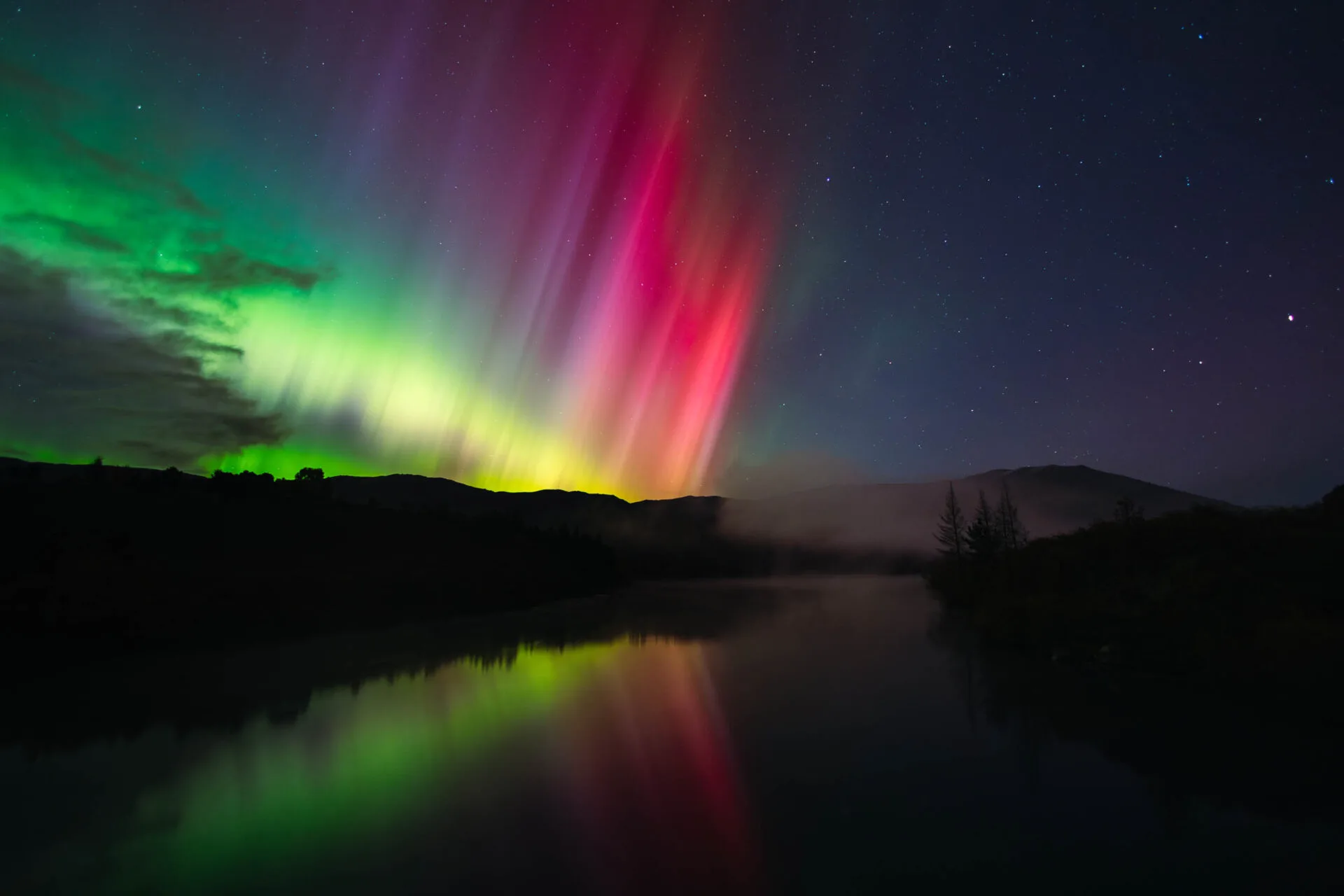
The aurora isn't only in the north. In the southern hemisphere it's called the aurora australis, and from New Zealand's South Island it can be seen fairly often, mainly from Southland, Otago and Stewart Island. Unlike in the north, you usually see it low over the southern horizon.
In May 2024 came one of the strongest geomagnetic storms in decades. The aurora was visible all over New Zealand, even from Auckland, and the sky was red, green and purple. I'll never forget that night: the cover photo is from it.

How to photograph stars and the Milky Way
- A fast wide-angle lens (14–24 mm, f/2.8 or faster).
- ISO 3200–6400, 15–25 s (by the 500 rule and your focal length).
- Manual focus on a bright star.
- New moon: plan your shoot around the new moon, when the sky is darkest.
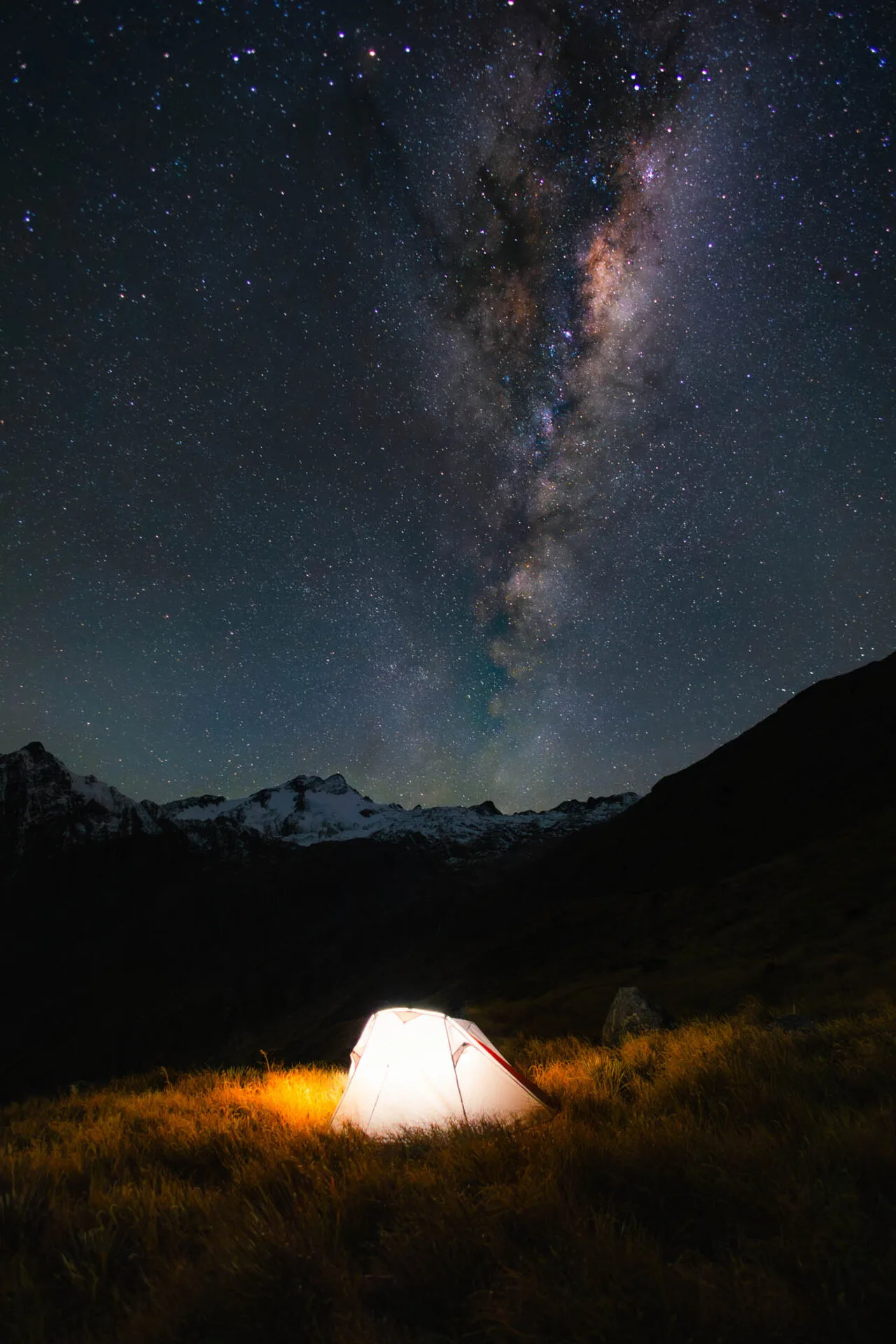
- A foreground: a tent, a hut, a tree or a person with a headtorch. My favourite is a lit tent under the Milky Way.
The same principles apply to the aurora: a detailed guide is in how to photograph the northern lights.
Where to sleep under the stars
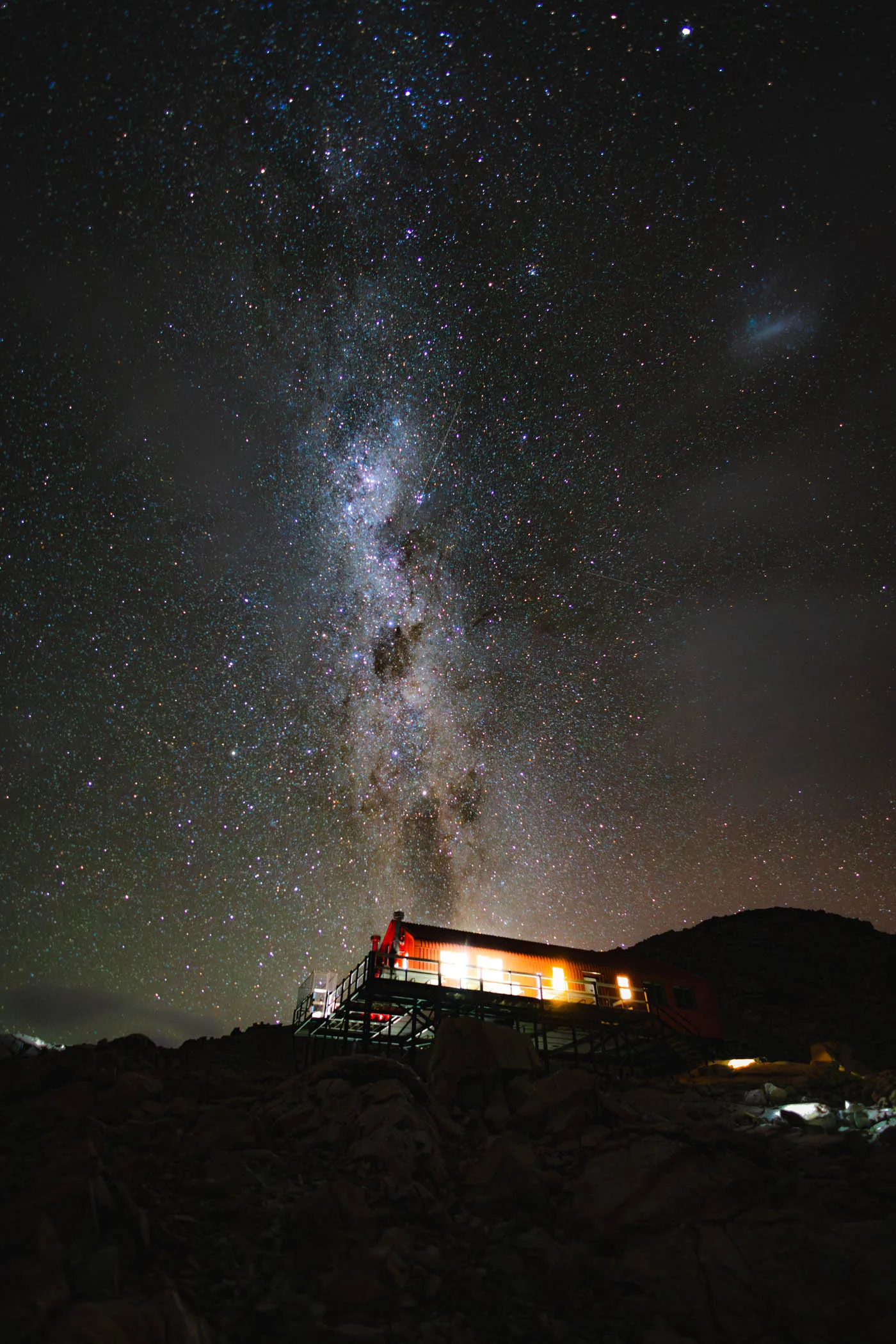
DOC campsites and mountain huts are ideal: far from lights and right in nature. My favourites: the campsites by Lakes Tekapo and Pukaki, White Horse Hill below Aoraki and the huts in Arthur's Pass. More about living in a car and sleeping in nature in living in a car.
Besides New Zealand, I've photographed the aurora in Norway and Iceland, and each one is different.
Faq
Can you see the aurora in New Zealand?
Yes, the aurora australis is visible mainly from the South Island: Southland, Otago and Stewart Island. In strong storms, even from the North Island.
Where is the best place for stars in New Zealand?
The Aoraki Mackenzie Dark Sky Reserve at Lake Tekapo and Aoraki/Mount Cook, Stewart Island and Great Barrier Island.
When is the best time for the Milky Way in New Zealand?
The core of the Milky Way is best seen from February to October, most strongly in the winter months around the new moon.