Photography around Tromsø: the best places on Kvaløya, Sommarøy and in Lyngen
For a photographer, Tromsø is almost unfair. Twenty minutes by car and you're at a fjord with mountains, an hour and you're on a white beach with turquoise water, two hours and you're in the Lyngen Alps, where peaks rise straight out of the sea. I live here and shoot all year round, so I've listed the places I return to most with my camera, by day and at night under the northern lights.
- Tromsø – Fjellheisen – cable car with a view of the city 69.638° N, 18.988° E
- Ersfjordbotn – a fjord with mountains like Lofoten 69.685° N, 18.599° E
- Grøtfjord – a beach with mountains behind 69.768° N, 18.528° E
- Tromvik – fishing village at the end of the road 69.770° N, 18.340° E
- Sommarøy – white beaches and islets 69.634° N, 18.012° E
- Lakselvbukt – gateway to Lyngen 69.439° N, 19.656° E
- Lyngen Alps – peaks over 1,800 m 69.580° N, 20.200° E
Fjellheisen: Tromsø from above
The Fjellheisen cable car takes you in a few minutes up Storsteinen (421 m) above the city. The view of Tromsø, the bridge and the islands around is most beautiful at dusk, when the city lights come on and the sky is still blue. If you like, you can walk up the Sherpa steps: more than 1,300 stone steps built by Nepali Sherpas.
Kvaløya, the Whale Island
Right across the bridge from Tromsø begins the island of Kvaløya. It has so many fjords, beaches and mountains that it could fill a whole week.
Ersfjordbotn
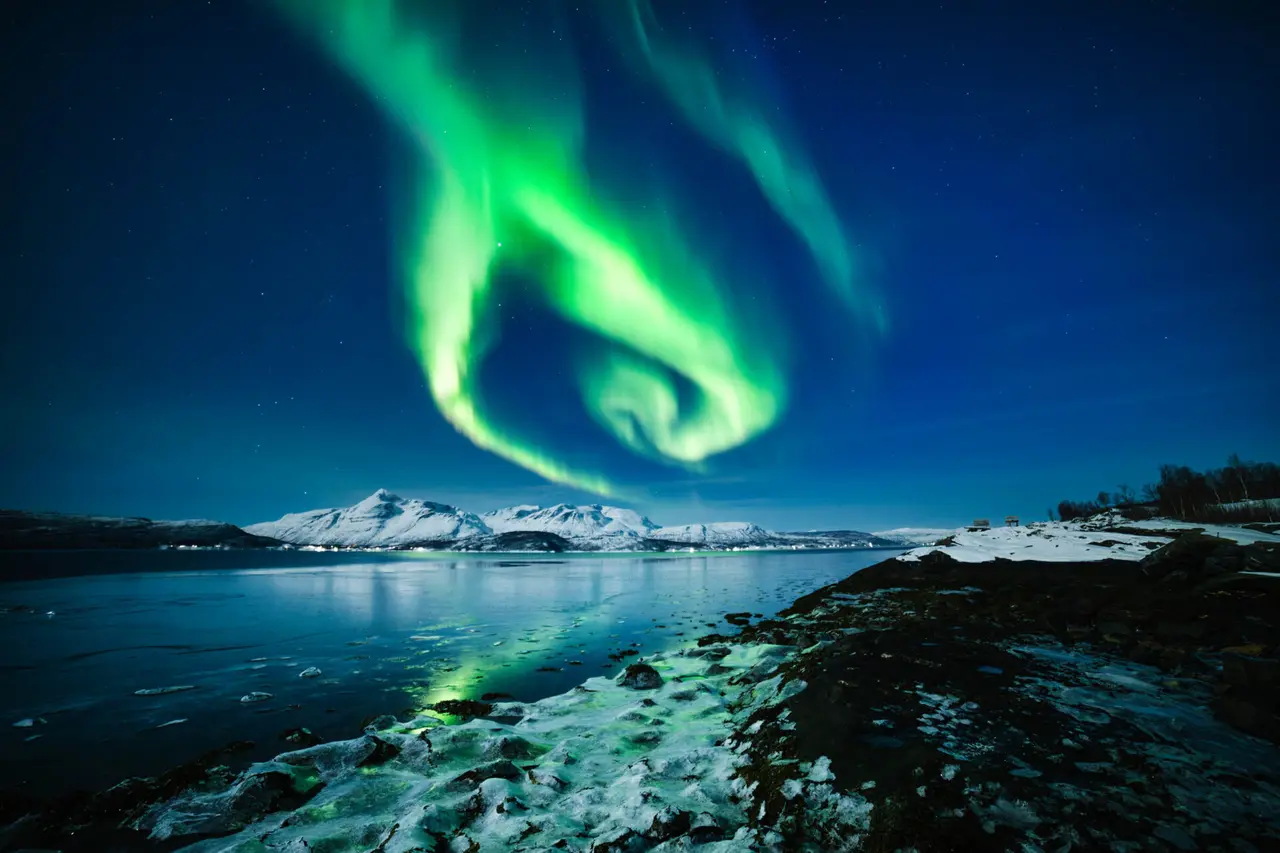
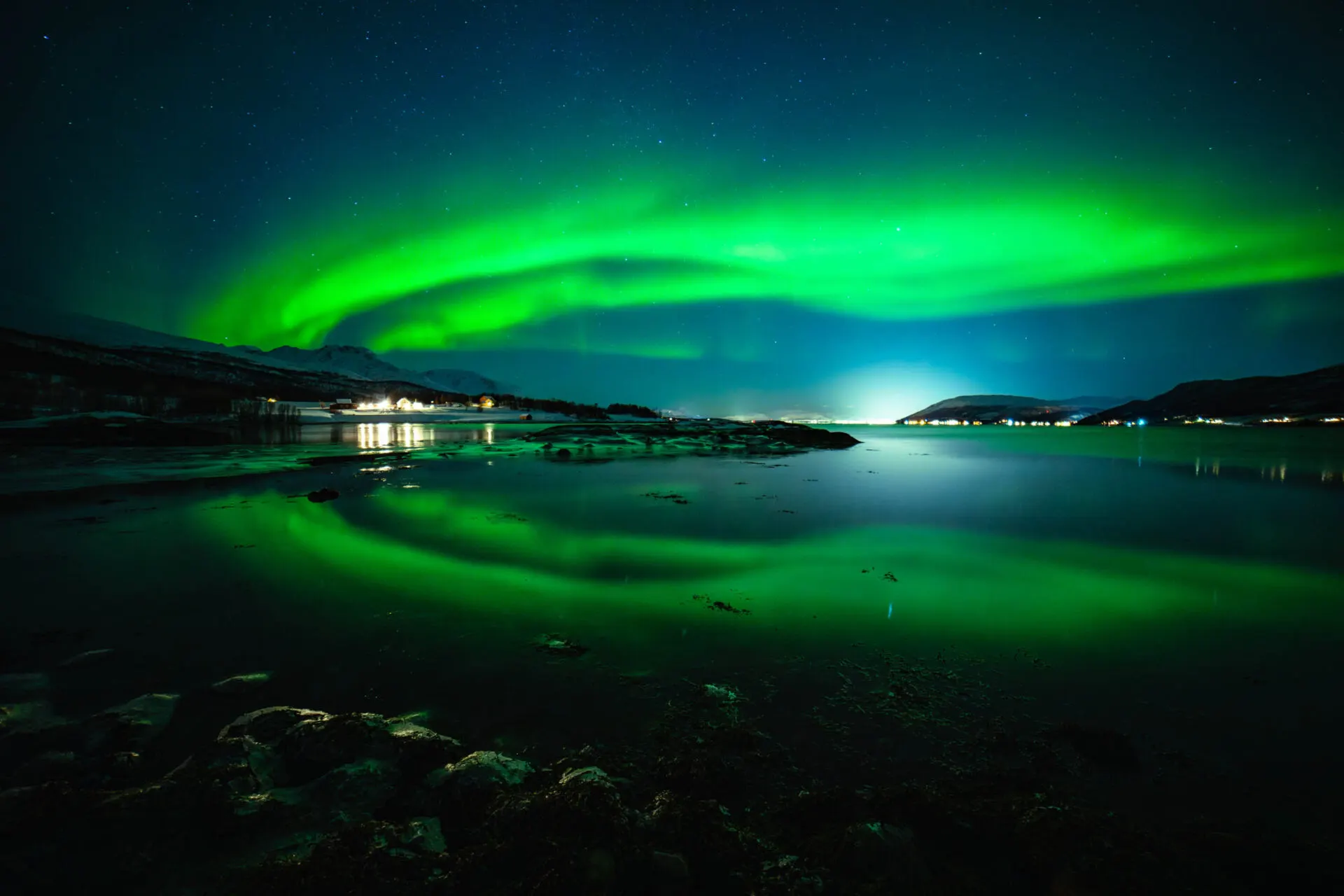
The end of the Ersfjorden fjord, surrounded by steep peaks. In winter the water is as smooth as a mirror and the mountains reflect in it. It's one of my favourite places for hunting the northern lights close to town.
Grøtfjord and Tromvik
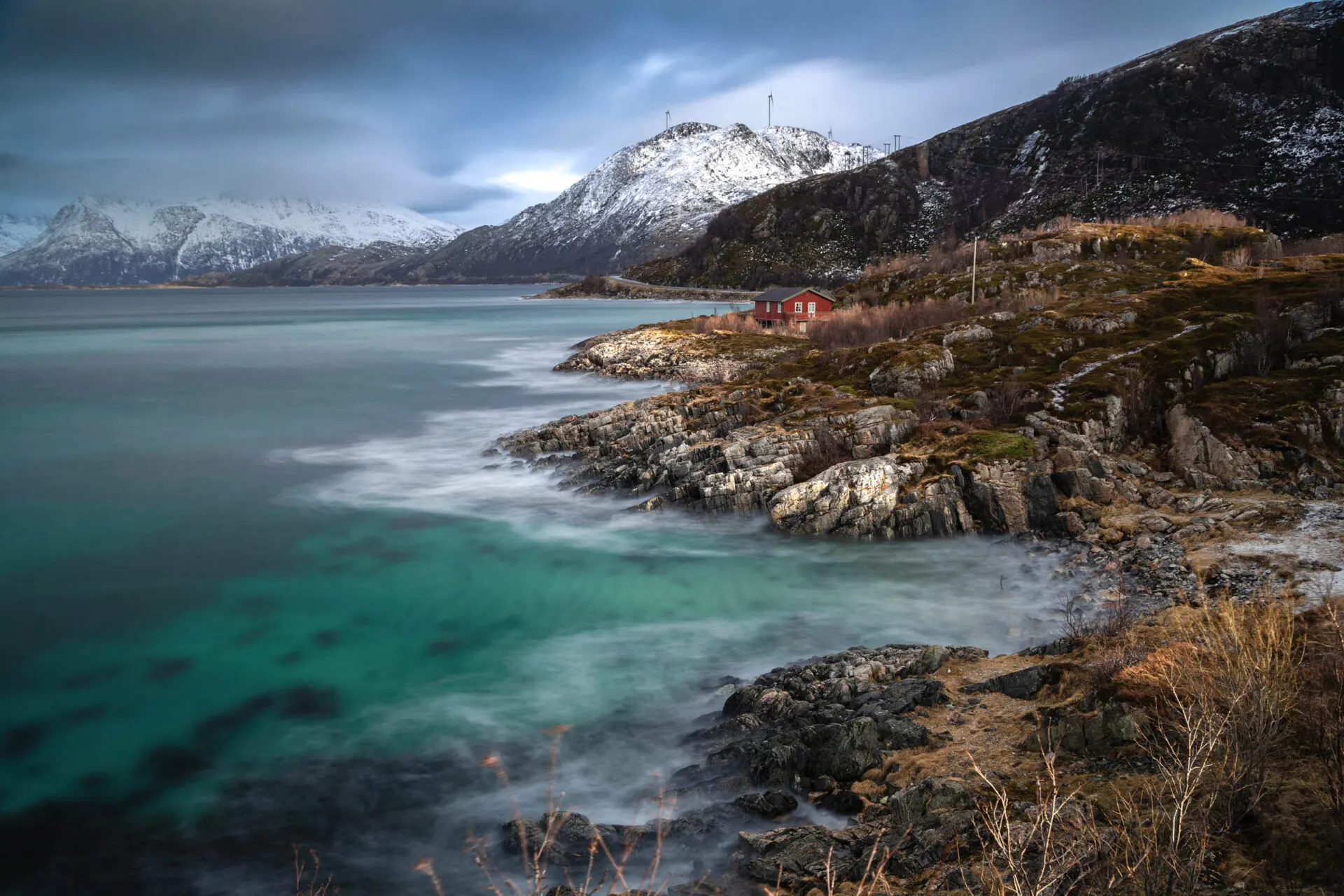
The road past Ersfjord continues to Grøtfjord, with a wide beach backed by mountains, and on to the fishing village of Tromvik. Here the world really ends: beyond the village there's only the sea.
Sommarøy: the Caribbean above the Arctic Circle
Sommarøy is a group of islets about an hour's drive from Tromsø. In summer the white beaches and turquoise water look tropical; only the water temperature quickly brings you back to reality. On the way it's worth stopping at the viewpoints above the Kaldfjorden fjord and at Hillesøy. In winter Sommarøy is great for photographing the blue hour and the aurora over the sea.
The Lyngen Alps
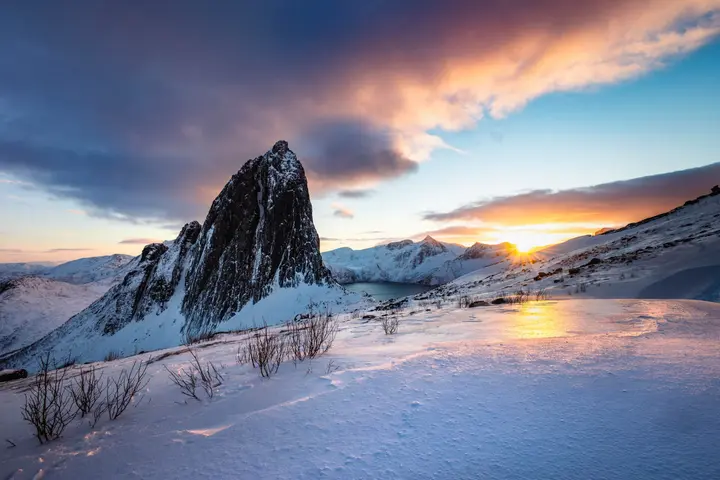
Lyngen is a peninsula east of Tromsø with mountains over 1,800 metres. It's a paradise for ski tourers and photographers. The quickest way is the ferry from Breivikeidet to Svensby, or around the fjord via Lakselvbukt. The mountains here drop straight into the sea, so you only need to stop by the road and you have a composition. In winter there are also snowmobile tours here.
My tips for photography in Arctic Norway
- Batteries drain fast in the cold. Keep spares in a pocket close to your body.
- A tripod is a must: in winter there's little light even during the day.
- A polarising filter helps with reflections on water and snow. I wrote more in my article on photography filters.
- Studded winter tyres and careful driving. The roads are often icy and darkness comes fast.
- Check the forecast on yr.no and on aurora forecast sites.
If you don't want to drive on icy roads, I'll gladly show you my favourite places.
Faq
Where can I photograph the northern lights near Tromsø?
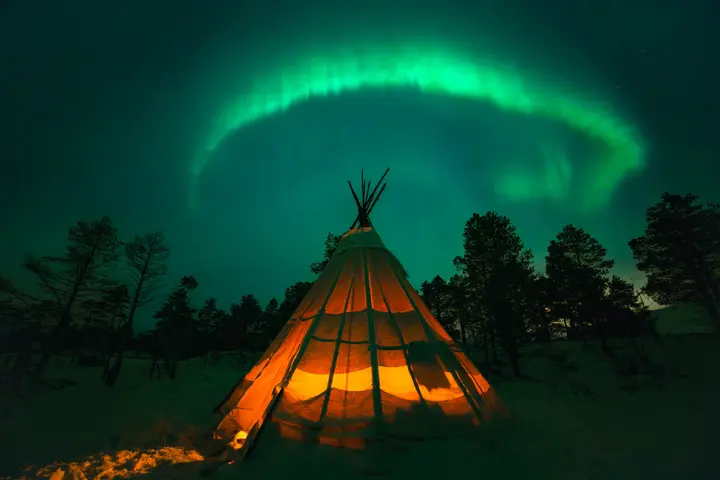
Closest to town are Ersfjordbotn and Grøtfjord on Kvaløya. When it's cloudy over the coast, people drive inland towards Skibotn or the Finnish border, where it's often clearer.
Do I need a car in Tromsø?
For photography around the area, yes, or join an organised tour. City buses don't go to remote places, and taxis are expensive.
When is the best time to photograph in Tromsø?
Every season has something. For the aurora, September to March; for snowy landscapes with the aurora, February and March; for hiking and the midnight sun, June and July.