Senja: a guide to northern Norway's most beautiful island
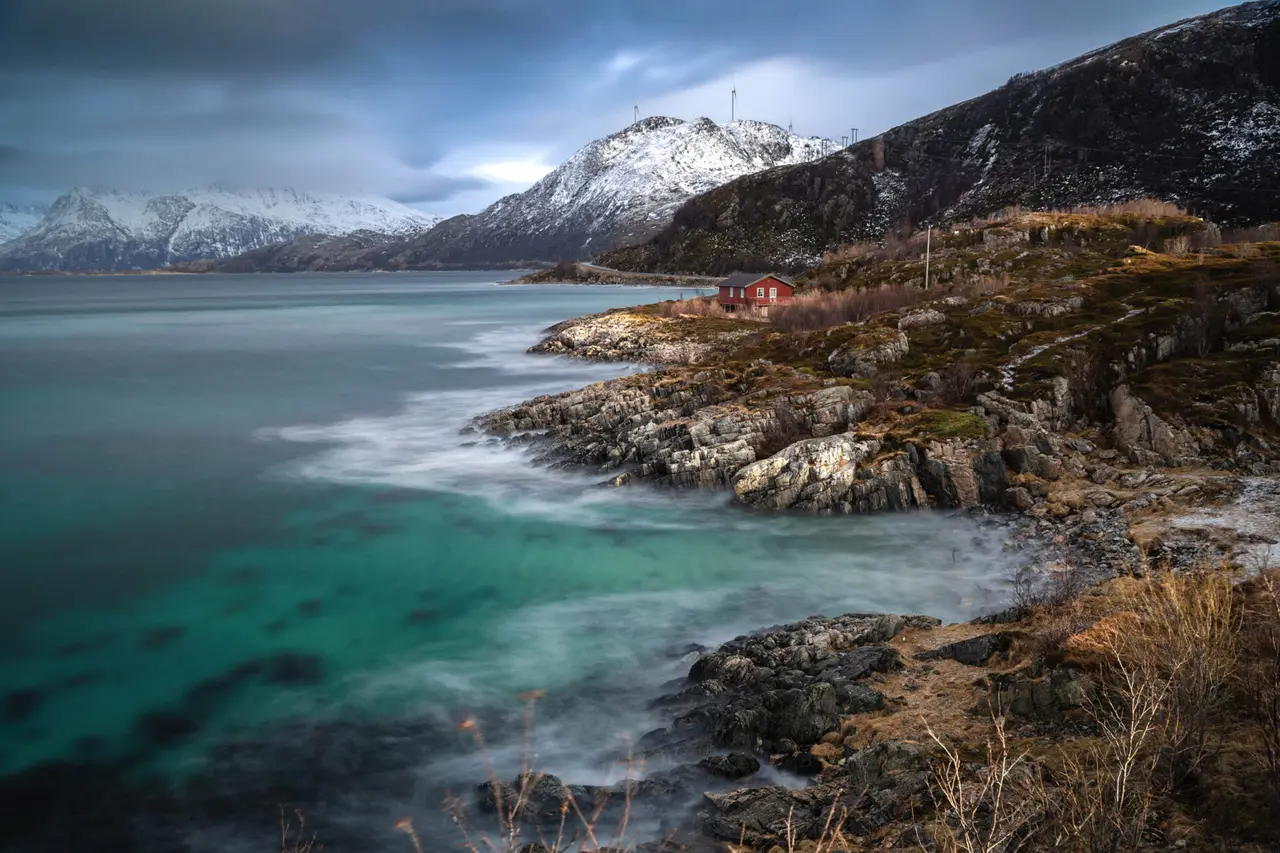
Say northern Norway and most people think of Lofoten. A little further north, though, only three hours' drive from Tromsø, lies an island that enchanted me even more. Senja is Norway's second-largest island, and its north-west coast looks as if someone took the most dramatic Lofoten peaks and left out the tour buses. In this guide you'll find my favourite places, a two-to-three-day loop and photography tips.
Getting to Senja
The easiest way is to drive from Tromsø via Finnsnes, where the Gisundbrua bridge links Senja to the mainland. The drive takes about three hours. In summer there's also a ferry from Brensholmen near Tromsø to Botnhamn, which shortens the trip and is an experience in itself. From Senja you can continue in summer on the ferry from Gryllefjord to Andøya and on to Vesterålen and Lofoten.
- Finnsnes – the Gisundbrua bridge, shopping and fuel 69.230° N, 17.981° E
- Gryllefjord – the summer ferry to Andøya 69.363° N, 17.055° E
- Tungeneset – a viewpoint on the Devil's Teeth (Okshornan) 69.358° N, 17.285° E
- Bergsbotn – a viewing platform above the fjord 69.440° N, 17.339° E
- Mefjordvær – a fishing village below the mountains 69.525° N, 17.428° E
- Segla – the island's most famous hike 69.516° N, 17.593° E
- Husøy – an islet with a village in the middle of the fjord 69.530° N, 17.670° E
- Botnhamn – the ferry to Tromsø 69.542° N, 18.038° E
The Senja National Tourist Route
The north-west coast is part of a National Tourist Route (Nasjonal turistveg Senja). It's a road of about 100 kilometres between Gryllefjord and Botnhamn, full of tunnels, hairpins and rest stops with designed viewpoints. Expect it to take a whole day, because you'll stop every few kilometres.
Tungeneset
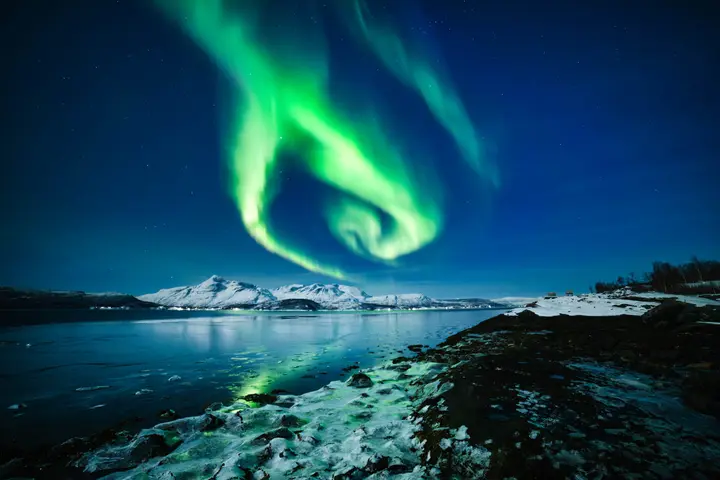
A wooden boardwalk leads over the rocks right down to the sea, with a view of the jagged Okshornan, known as the Devil's Teeth. The best light here is in the evening, and in winter when the sun only grazes the horizon. At night it's one of the best places on Senja to photograph the aurora: the lights reflect in the wet stones and the peaks make a perfect foreground.
Bergsbotn
A 60-metre viewing platform above the Bergsfjorden. A short stop that's worth it in any weather. In summer it's busy around midday; in the morning and evening you have it to yourself.
The Segla hike
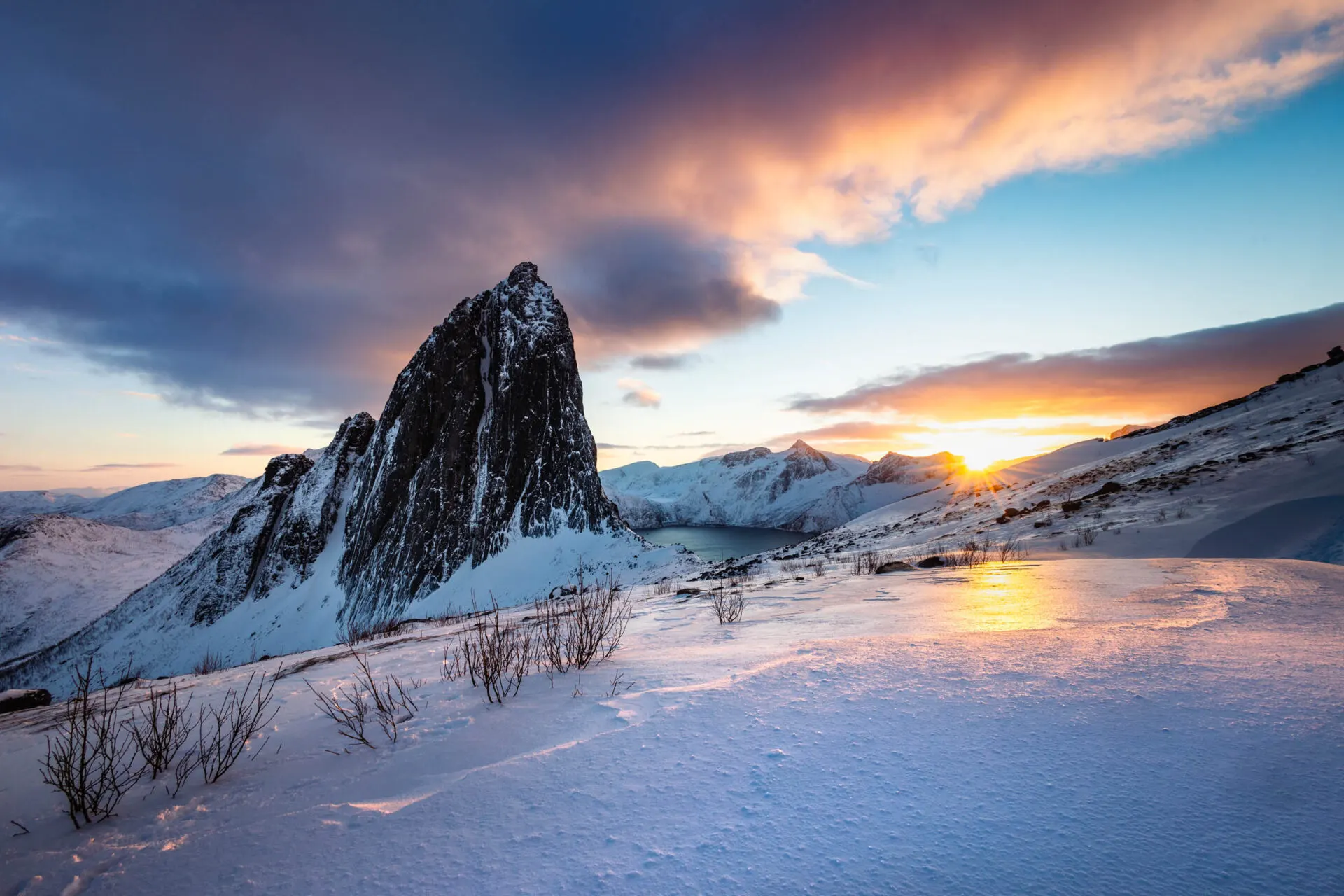
Segla (639 m) is Senja's most photographed mountain. The steep peak drops straight into the fjord, and the view from the ridge to neighbouring Hesten and the village of Fjordgård is one of the most iconic in all of Norway. The hike starts in Fjordgård; going up takes about an hour and a half to two hours. The path is steep, stony in places and slippery in the rain.
Husøy and the fishing villages
Husøy is a small islet in the middle of the Øyfjorden, linked to the mainland only by a narrow road. Not quite a hundred people live here, making their living from fishing. Coloured houses, cod-drying racks and mountains all around: an ideal place for drone photography and a walk. Mefjordvær and Gryllefjord have a similar atmosphere.
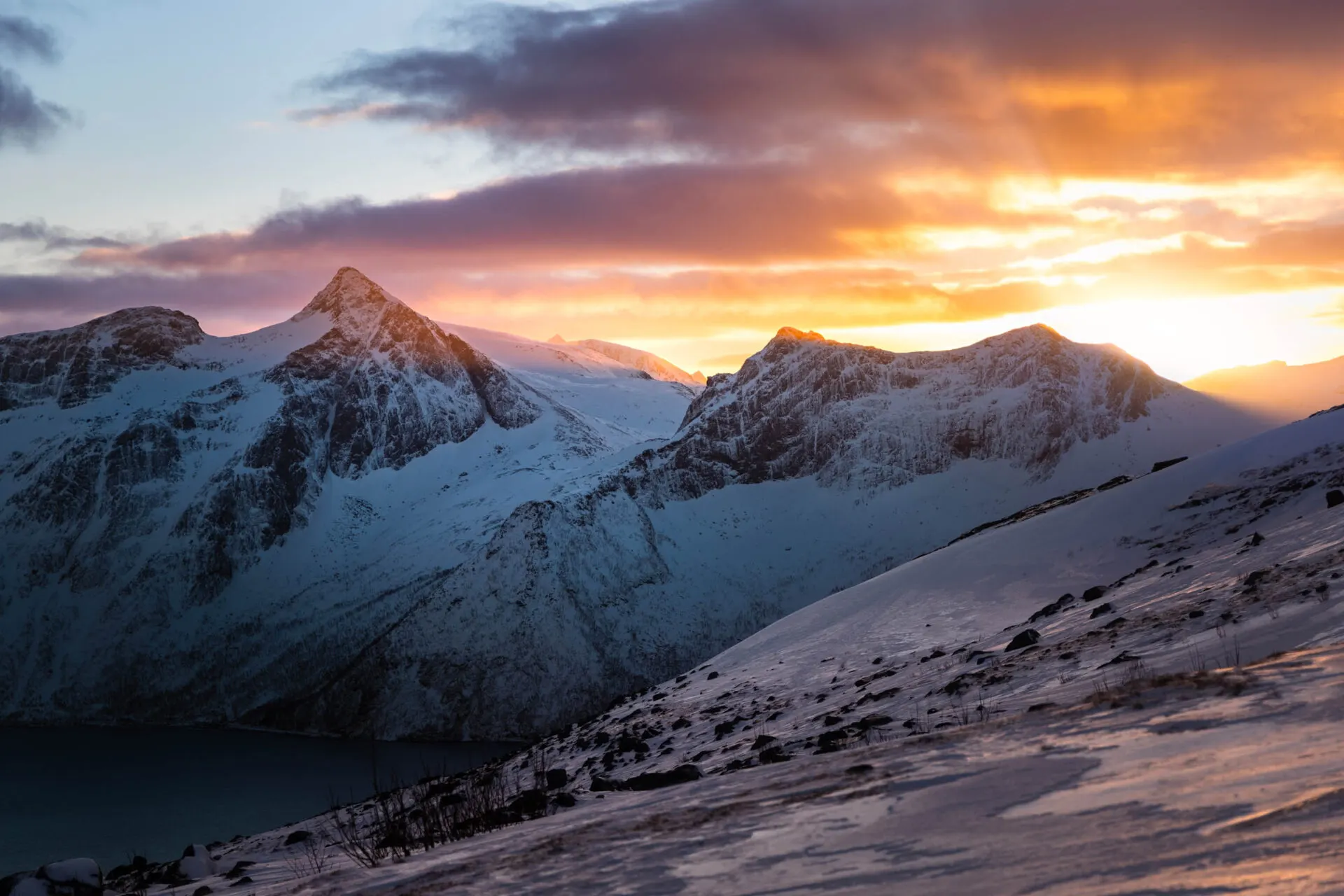
When to go to Senja
- Winter (December–March): snow, the aurora and magical light. The roads are maintained, but you need experience of driving on snow. Some hikes are dangerous because of avalanches.
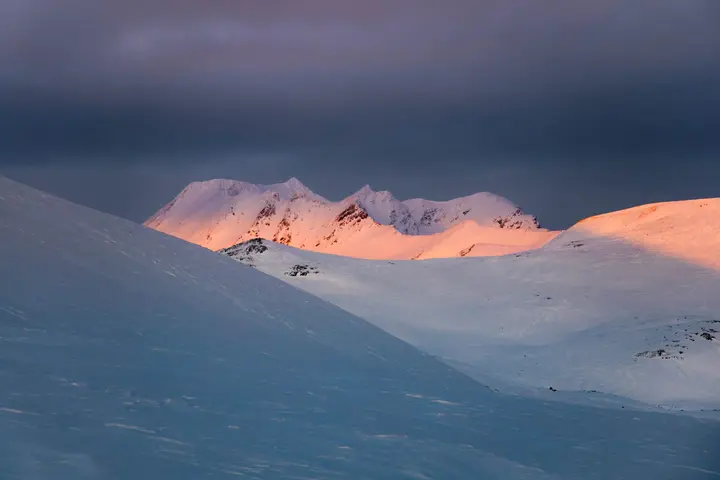
- Spring (April–May): long days, snow on the mountains and still a chance of aurora in early April. My favourite time for photography.
- Summer (June–August): the midnight sun, the best hiking conditions and the ferries running. Also the most people.
- Autumn (September–October): autumn colours, the first aurora and quiet.
Accommodation and practical tips
Senja has only a few small shops, so do your shopping in Finnsnes. Accommodation fills up fast in the season: try the cabins (rorbu) in Mefjordvær, Hamn i Senja or the campsite in Fjordgård. Wild camping is allowed in Norway under the allemannsretten law, but be considerate: more than 150 metres from houses, at most two nights in one place, and no fires between 15 April and 15 September unless there's snow.
Senja is a place I keep coming back to. If you only have one day, drive from Tromsø at least to Kvaløya and Sommarøy. But if you can, give Senja more time: it will reward you.
Faq
Senja or Lofoten?
Lofoten is better known and has more services; Senja is wilder, quieter and closer to Tromsø. If you want mountains dropping into the sea without the crowds, choose Senja.
How many days do I need for Senja?
One day is enough to drive the National Tourist Route, but two to three days are ideal, so you can hike Segla or Hesten and wait for good light.
Can you see the aurora on Senja?
Yes, from September to early April. Senja is far from light pollution, so it's a great place to watch.