Working and living in Norway: life above the Arctic Circle
When I came back from New Zealand at the end of 2024, I knew I wouldn't go back to an office. A few months later I was packing my suitcase again, this time heading north, to Arctic Norway near Tromsø. This is where I live and work as a photographer and northern lights guide. In this article I write down what working and living in Norway above the Arctic Circle is like, what an ordinary day costs and what to prepare for if you're thinking about a similar step.
Why Tromsø
Tromsø lies at 69°39′ north and is called the "gateway to the Arctic". It's a lively university town of about 78,000 people, with an airport with direct flights to Oslo and, above all, one of the best positions in the world for seeing the aurora. It lies right under the so-called auroral oval, so when it's clear the lights dance in the sky even at lower activity.
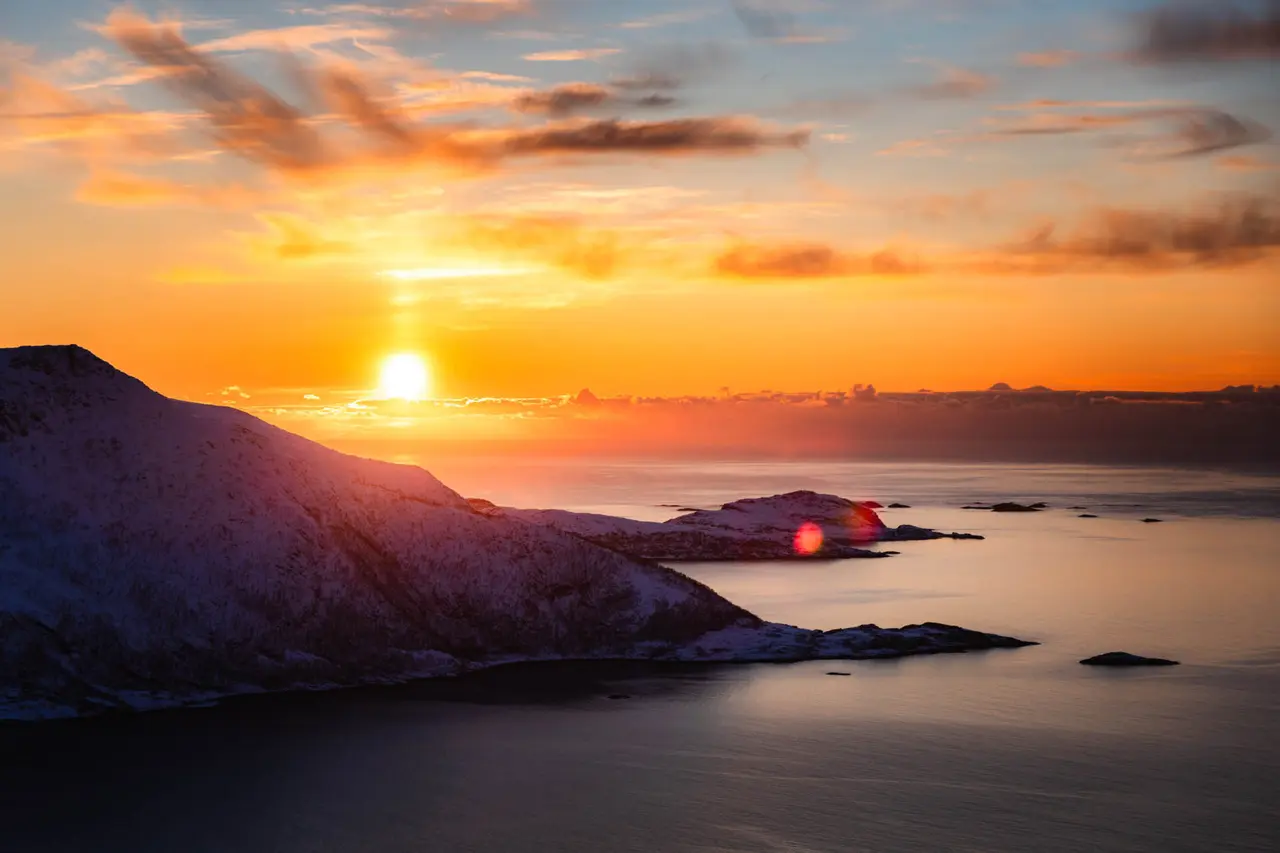
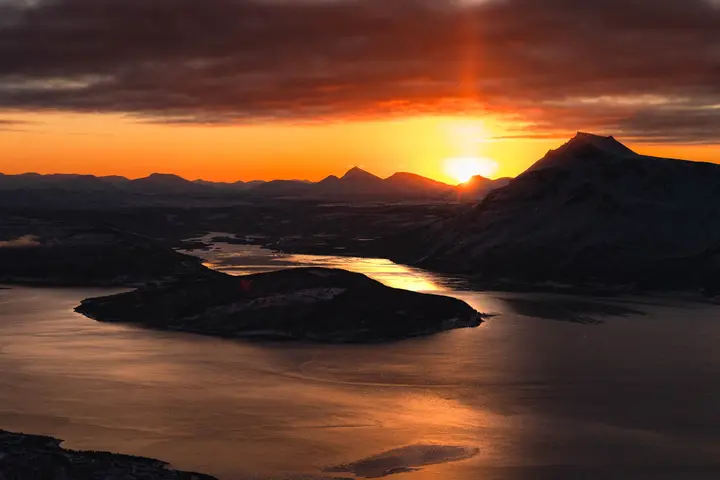
For me it was the combination of mountains, fjords and work I love. Within a few dozen minutes by car I'm on the island of Kvaløya, in the Lyngen Alps or by a fjord without a single street light.
- Tromsø – the town, the airport and the start of every trip 69.649° N, 18.955° E
- Kvaløya – an island of fjords and beaches just over the bridge 69.700° N, 18.550° E
- Sommarøy – white beaches and turquoise water 69.634° N, 18.012° E
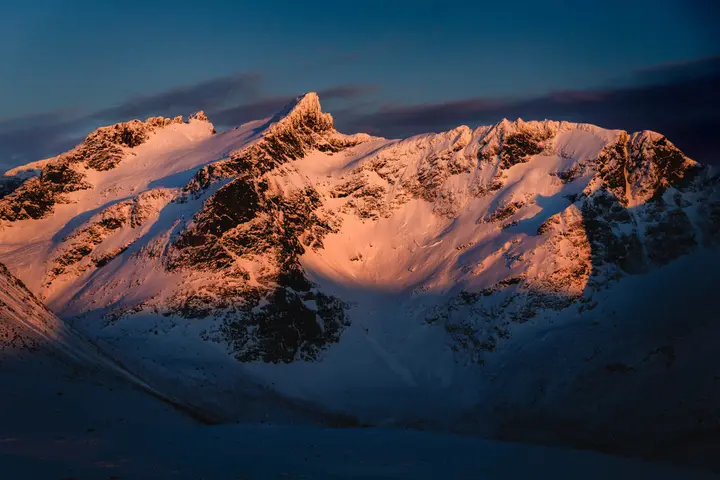
- Lyngen Alps – peaks over 1,800 m straight out of the sea 69.580° N, 20.200° E
The polar night and the midnight sun
The biggest change from life in the Czech Republic is the light. From late November to mid-January the sun doesn't rise in Tromsø at all. But the polar night isn't dark like a cave: around midday there are several hours of blue and pink twilight, which photographers call the "blue hour", except that here it lasts all day. The snow reflects every ray and the landscape looks like a fairy tale.
In summer it's exactly the opposite. From about 20 May to 22 July the sun doesn't set, and the midnight sun lets you go hiking at two in the morning. The body adjusts slowly: blackout curtains are standard in every bedroom.
Working as a northern lights guide
My season starts in September and ends at the beginning of April, when there's already too much light up north. In the evening I pick up a small group in the centre of Tromsø, we choose a direction by the cloud forecast and set off after clear skies: sometimes to a fjord outside town, sometimes all the way to the Finnish border. On the spot I light a fire, make tea and above all show people how to photograph the aurora, even on their own phone.
It's work where nothing can be planned ahead. The weather, solar activity and a feel for where to go decide everything. But when the sky lights up and the group starts shouting with excitement, it's the best feeling in the world. If you'd like to join, see northern lights hunting in Tromsø.
Outside the night trips I photograph for hotels and brands through my studio LATITUDE, and in winter I also photograph experiences such as dog sledding or reindeer feeding.
What living in Norway costs
Norway is expensive, no doubt about it. But wages are higher too, so you get used to it. To give you an idea, from my experience:
- Rent: a room in a shared flat in Tromsø costs roughly 7,000–10,000 NOK a month, a flat of your own considerably more. Housing is scarce in the season, so look well ahead.
- Food: a supermarket shop is about twice as expensive as in the Czech Republic. The Rema 1000, Kiwi and Extra chains are worth it.
- Alcohol: wine and spirits are sold only in the state Vinmonopolet shops, and the prices will scare you.
- A car: essential in winter. Count on studded winter tyres, toll gates and expensive petrol.
Paperwork and bureaucracy
As an EU/EEA citizen you can work in Norway without a visa. If you stay longer than three months, you must register with the police and apply to the Skatteetaten tax office for a Norwegian identification number. Without it you can't open a bank account or sign a lease. The whole process takes patience: count on several weeks. Always check the current conditions on the UDI and Skatteetaten websites.
What surprised me most
Norwegians are reserved at first, but once they invite you hiking or skiing, you have a friend for life. People spend time outdoors in any weather: "there's no bad weather, only bad clothing" applies here literally. And then the calm: shops closed on Sunday, families on cross-country skis and a little fire with sausages on every hill.
If you're thinking of working in Norway, start with seasonal work in tourism. Tour companies in Tromsø keep multiplying, and people with languages, a driving licence and mountain experience are in demand. Thanks to my experience in New Zealand I knew what I was getting into.
Faq
Is it hard to find work in Norway without Norwegian?
In tourism in Tromsø you'll get by in English. For work in healthcare, public administration or construction, though, Norwegian is expected. The basics of the language open doors in everyday life too.
When is the polar night in Tromsø?
The sun doesn't rise from about 27 November to 15 January. Even so, there are several hours of twilight around midday.
Is it worth living in Norway?
Financially yes, if you find a permanent job. The main reason, though, is the nature and quality of life: mountains, fjords and the aurora behind your house.